Tree staking and bracing in Sierra Vista, AZ are specialized support methods used to stabilize trees that cannot stand securely on their own. Young trees, recently transplanted specimens, and mature trees with structural weaknesses often require reinforcement to withstand wind, shifting soil, and environmental stress. J W Tree Services provides stabilization solutions designed to protect trees while allowing natural growth and recovery.
In southeastern Arizona, strong seasonal winds, monsoon storms, and dry soil conditions can challenge even well-established trees. Newly planted trees are especially vulnerable because their root systems have not yet spread deeply into the surrounding soil. Without support, these trees may lean, uproot, or develop improper growth patterns that affect long-term stability.
When Tree Support Is Necessary
Not all trees require staking or bracing. In many cases, trees develop stronger trunks and roots when allowed to move naturally. Support systems are used only when stability is compromised or when environmental conditions make failure likely.
Newly Planted Trees
Transplanted trees often lack sufficient root anchorage during their first growing season. Wind movement can loosen soil around the roots, delaying establishment or causing the tree to tilt. Temporary staking keeps the tree upright while roots expand into surrounding soil.
Leaning Trees
A tree that begins to lean due to wind, soil erosion, or root disturbance may need corrective support. Stabilization helps reposition the trunk and prevents further movement while the root system recovers.
Storm-Damaged Trees
Trees that have suffered partial root damage or structural stress during storms may remain standing but weakened. Bracing can help prevent additional shifting until the tree regains strength or permanent decisions are made.
Tree Staking Methods
Staking typically involves installing one or more support posts around the tree and securing the trunk with flexible ties. The goal is to limit excessive movement without immobilizing the tree completely, allowing natural strengthening to occur.
Single Stake Systems
For smaller or lighter trees, a single stake placed on the windward side may provide adequate support. The trunk is loosely attached to allow slight movement while preventing tipping.
Multiple Stake Systems
Larger or more exposed trees may require two or three stakes positioned around the trunk. This configuration distributes tension evenly and stabilizes the tree from multiple directions.
Flexible Tie Materials
Ties must be strong enough to hold the tree upright but soft enough to avoid damaging the bark. Proper installation prevents abrasion and allows the trunk to thicken naturally as the tree grows.
Tree Bracing for Structural Support
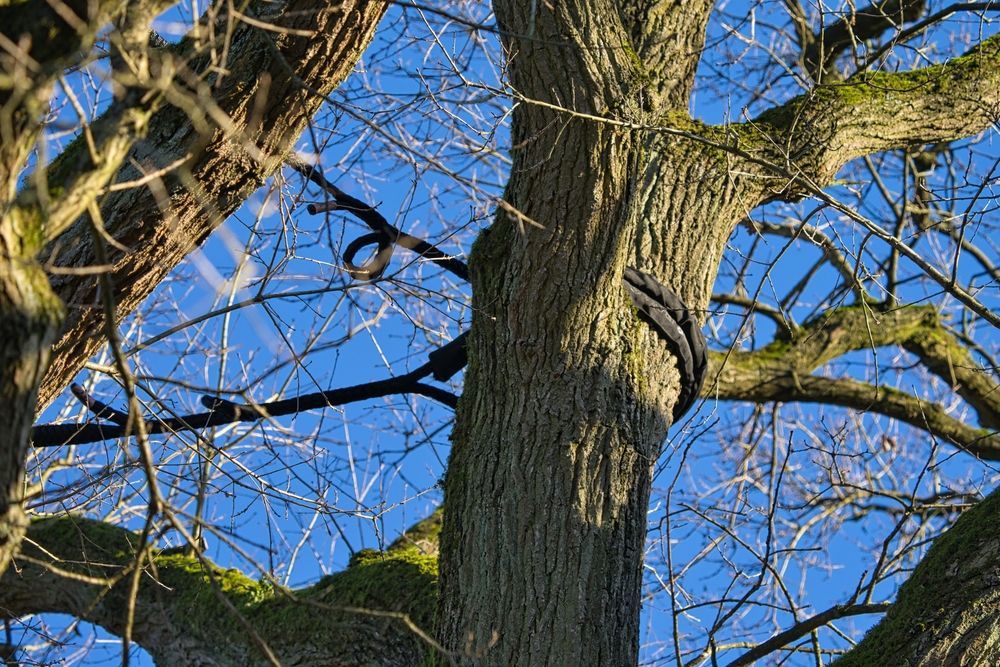
Bracing differs from staking in that it is typically used for mature trees with structural weaknesses rather than newly planted ones. This method reinforces the tree internally or between major limbs to reduce the risk of splitting or collapse.
Cabling Between Limbs
Steel cables can be installed high in the canopy to redistribute weight and limit excessive movement of heavy branches. This approach is often used when a tree has a wide canopy with weak attachment points.
Rod Bracing for Split Trunks
When a trunk or major limb has cracked but remains viable, threaded rods may be inserted to hold the sections together. This stabilization can extend the life of the tree while reducing the chance of sudden failure.
Supplemental Ground Support
In some cases, external supports may be combined with internal bracing to provide additional stability for severely compromised trees.
Monitoring and Adjustment Over Time
Support systems are not intended to remain in place indefinitely. Regular monitoring ensures that ties, cables, and braces continue to function correctly without restricting growth or causing damage.
Preventing Girdling
As the trunk expands, ties can become too tight and begin to constrict the bark. Periodic adjustments prevent this condition, which can interfere with nutrient flow and weaken the tree.
Evaluating Root Establishment
For newly planted trees, staking can often be removed once roots have developed sufficiently to anchor the tree independently. Leaving supports in place longer than necessary may reduce trunk strength.
Assessing Structural Improvement
Mature trees that have been braced should be evaluated periodically to determine whether the support system remains necessary or if additional measures are required.
Tree Staking FAQs
What is tree staking, and when is it needed?
Tree staking provides support for newly planted trees that need help remaining stable while their roots become established. The appropriate support depends on the tree's size, stability, and growing conditions.
Can tree staking help protect trees during monsoon season?
Properly selected support measures can help stabilize young trees and reduce the risk of leaning or uprooting during strong winds. Tree condition and soil stability should be considered when deciding whether support is needed.
What is the difference between tree staking and bracing?
Staking generally supports young trees as their root systems establish. Bracing reinforces mature trees with structural weaknesses, such as weak limbs or trunk damage.
Do you provide tree staking and bracing in Sierra Vista Estates and Huachuca City?
J W Tree Services serves Sierra Vista Estates, Huachuca City, and Sierra Vista. Contact the company to discuss a young tree that needs support or a mature tree with possible structural weaknesses.
Adapting Support to Desert Conditions
Sierra Vista’s environment presents unique challenges that influence how trees are stabilized. Dry, compacted soils may not hold stakes securely without proper installation, while sudden heavy rains can soften the ground and reduce anchoring strength. Strong winds common during seasonal weather patterns place additional stress on both the tree and its support system.
Selecting appropriate materials and installation techniques ensures that staking and bracing remain effective under these conditions. Proper positioning also prevents interference with irrigation systems, walkways, or nearby structures.
Tree staking and bracing in Sierra Vista, AZ provide essential support for trees that would otherwise be at risk of leaning, splitting, or uprooting. J W Tree Services performs stabilization work designed to protect tree health while promoting natural development and long-term stability. With the right approach, vulnerable trees can recover, establish strong root systems, and continue to thrive in the challenging desert landscape.