Stump grinding and removal in Sierra Vista, AZ are essential services following tree removal or when an old stump has been left to decay over time. While the visible tree may be gone, the remaining stump and root system can continue to affect the usability, safety, and appearance of a property. J W Tree Services provides professional solutions to eliminate these remnants and restore the landscape for future use.
In the desert environment of southeastern Arizona, stumps do not always break down quickly due to limited moisture. Instead, they can persist for many years, becoming obstacles for landscaping projects and potential habitats for insects. Removing the stump allows the area to be leveled, replanted, or repurposed without interference from buried roots or decaying wood.
Why Stump Removal Matters
Leaving a stump in place may seem harmless at first, but it can lead to several long-term issues. Stumps can interfere with routine property maintenance and create complications for new construction or planting.
Obstruction to Land Use
A protruding stump occupies valuable space in yards, gardens, or open areas. It can prevent the installation of patios, driveways, fencing, or irrigation systems. Even smaller stumps can make mowing difficult and limit how the land can be utilized.
Safety Hazards
Stumps present tripping risks, especially in areas where children play or where foot traffic is common. When partially hidden by grass or debris, they can be difficult to see, increasing the likelihood of accidents.
Pest Attraction
Decaying wood often attracts termites, ants, beetles, and other insects. Once established, these pests may migrate to nearby trees or structures, creating additional concerns for property owners.
The Stump Grinding Process
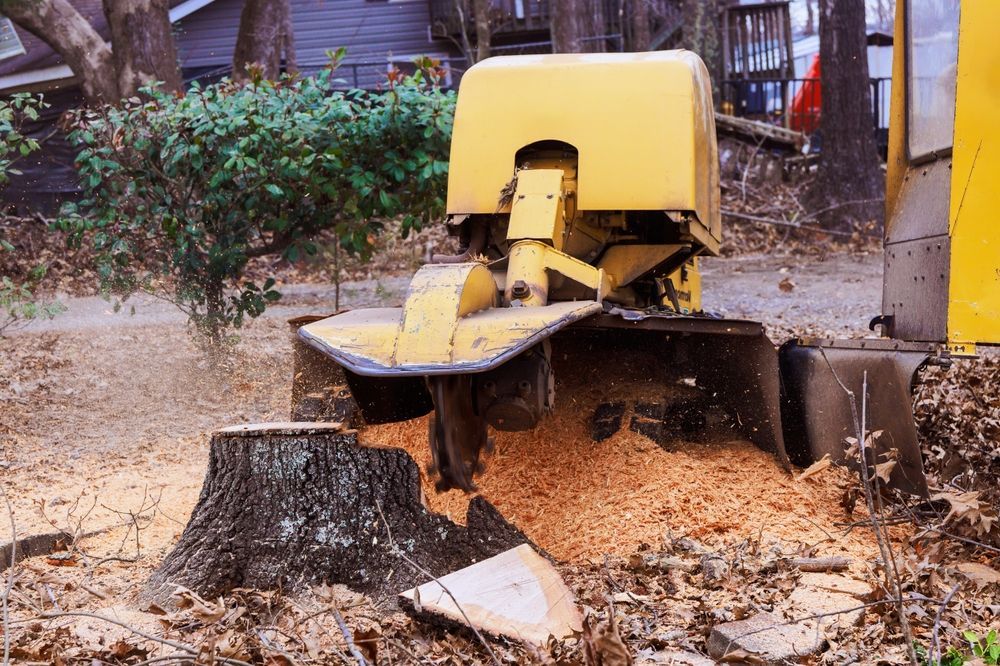
Stump grinding is a mechanical method that reduces the stump to small wood chips using a specialized cutting wheel. Unlike full excavation, grinding focuses on removing the visible portion of the stump below ground level while leaving most of the root system to decompose naturally over time.
The process begins with clearing rocks, debris, and obstacles from the immediate area. The grinding machine is then positioned over the stump, where rotating teeth gradually shave the wood down layer by layer. The stump is typically ground several inches below the soil surface, allowing the area to be covered with soil or sod afterward.
Grinding produces mulch-like material that can be left on site for use as ground cover or removed depending on the intended future use of the space. This method minimizes disruption to surrounding landscaping compared to digging out the entire root mass.
Complete Stump Removal Options
In some cases, property conditions or project requirements call for full stump extraction rather than grinding. Complete removal involves excavating the stump and major roots from the ground, leaving a clean area ready for construction or planting.
Excavation for Construction Projects
When building foundations, installing utilities, or expanding hardscapes, underground roots can interfere with excavation work. Removing the entire stump system ensures a stable base for future development.
Large or Deep Root Systems
Certain tree species develop extensive roots that continue to produce shoots even after the tree is cut down. Full removal prevents regrowth and eliminates the possibility of roots damaging nearby structures or paving.
Replanting in the Same Location
If a new tree is planned for the exact spot where the old one stood, removing the remaining roots provides space for healthy root development and prevents competition for nutrients.
Impact on Soil and Landscape
Stump removal changes the composition of the soil in the immediate area. Grinding leaves organic material that gradually decomposes, enriching the soil but also potentially causing temporary settling as the material breaks down. Adding fresh soil can help restore a level surface.
Complete extraction creates a larger void that must be backfilled and compacted to prevent future sinking. Proper site preparation ensures the area remains stable and suitable for landscaping or construction activities.
In Sierra Vista’s often rocky or compacted soils, specialized equipment may be required to access roots effectively. Careful handling protects nearby irrigation lines, foundations, and other underground features.
Stump Grinding FAQs
Why should I have a tree stump ground down?
A remaining stump can create a tripping hazard, obstruct yard maintenance, and attract pests. Stump grinding reduces the stump below ground level, making the area easier to cover or repurpose.
What is the difference between stump grinding and stump removal?
Stump grinding reduces the remaining stump below ground level, while full stump removal extracts the entire root base when necessary. The best option depends on the stump and how you plan to use the area afterward.
Can stump grinding improve the usability of my yard?
Yes, grinding down a stump removes an obstacle that can interfere with landscaping and everyday outdoor activities. It can help make the area more practical for future use.
Do you offer stump services in Huachuca City and Sierra Vista Estates?
J W Tree Services serves properties in Huachuca City, Sierra Vista Estates, and Sierra Vista. Contact the company to discuss the stump's location, size, and whether grinding or full removal may be appropriate.
Restoring the Area After Removal
Once the stump is gone, the space can be transformed for new purposes. Property owners often choose to plant grass, install decorative landscaping, or prepare the area for outdoor structures. Removing the stump also improves the visual continuity of the yard, eliminating an aging or decaying focal point.
Surface Leveling
After grinding or extraction, the area is smoothed and filled as needed to match the surrounding grade. This step is important for preventing water pooling and maintaining a uniform appearance.
Debris and Chip Management
Wood chips produced during grinding can be redistributed as mulch or removed to create a clean planting surface. Managing this material helps determine how the area will be used going forward.
Long-Term Maintenance Considerations
Without the obstruction of a stump, routine tasks such as mowing, irrigation, and landscaping become easier and more efficient. The cleared space integrates seamlessly with the rest of the property.
Stump grinding and removal in Sierra Vista, AZ provide a practical solution for reclaiming space and eliminating hazards left behind after tree removal. J W Tree Services performs these services with attention to site conditions, soil stability, and future land use, ensuring the area is fully prepared for whatever comes next.