Removing a tree is a major decision that often involves safety concerns, property protection, and long-term landscape planning. Complete tree removal in Sierra Vista, AZ is frequently necessary when a tree becomes structurally unstable, diseased beyond recovery, severely damaged by storms, or positioned in a way that threatens buildings, power lines, or underground utilities. J W Tree Services provides full-scale removal solutions designed to eliminate risk while preserving the surrounding landscape.
In the desert climate of Cochise County, trees can face unique stress factors such as drought conditions, soil limitations, pest infestations, and intense seasonal storms. Over time, these pressures can weaken root systems and internal structure, making removal the safest option. Professional equipment, careful planning, and knowledge of local tree species are essential to complete the job without causing damage to nearby structures or terrain.
When Complete Tree Removal Is Necessary
Not every tree problem can be solved through trimming or treatment. In many cases, removal becomes the only viable solution to prevent hazards or accommodate property changes. Trees that lean significantly, show extensive trunk decay, or exhibit large dead sections may pose immediate danger, particularly during high winds common in the region.
Structural Instability
A tree with compromised structural integrity can fail without warning. Internal rot, split trunks, or root damage reduce the tree’s ability to support its own weight. These conditions are especially concerning near homes, driveways, or pedestrian areas where falling limbs or total collapse could cause serious damage or injury.
Disease and Pest Damage
Certain diseases and invasive insects can destroy a tree from the inside out. When treatment is no longer effective and the tree continues to decline, removal prevents the spread of infection to surrounding vegetation and eliminates a potential safety risk.
Property Development and Space Needs
Tree removal is sometimes required to make room for construction projects, driveway expansions, fencing, or utility installations. In these cases, precise removal ensures the surrounding soil remains stable and nearby landscaping is preserved.
The Complete Tree Removal Process
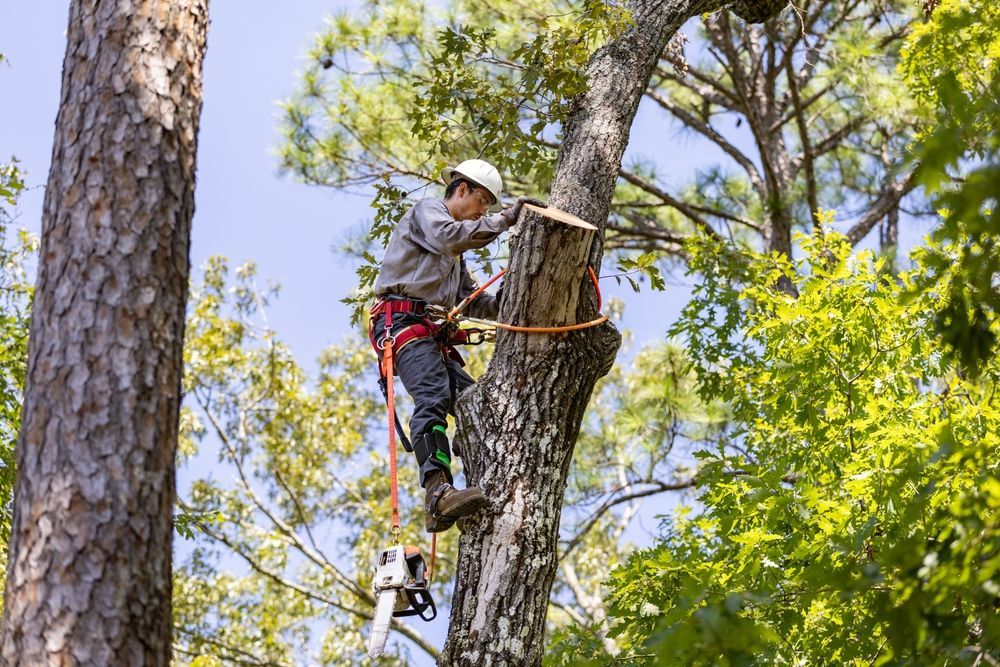
Professional removal involves far more than simply cutting down a trunk. Each project begins with an evaluation of the tree’s size, condition, and proximity to structures or obstacles. Careful planning determines the safest method, whether sectional dismantling from the top down or controlled directional felling in open spaces.
Specialized equipment such as chainsaws, rigging systems, cranes, and safety gear allows technicians to remove large or complex trees piece by piece. Branches are typically removed first to reduce weight and control the fall zone. The trunk is then cut into manageable sections, each carefully lowered or guided to the ground.
This systematic approach minimizes impact on lawns, hardscapes, and nearby plants. It also reduces the risk of debris striking buildings, vehicles, or utility lines. In residential neighborhoods, precision is especially important due to limited space and close property boundaries.
Safe Removal in Confined or Hazardous Areas
Many properties in Sierra Vista feature mature trees planted close to homes, patios, or perimeter walls. Removing these trees requires advanced techniques to prevent collateral damage. Professional crews use controlled rigging systems to lower branches safely rather than allowing them to fall freely.
Removal Near Structures
Trees growing near roofs, fences, or garages must be dismantled gradually. Each section is secured and lowered to avoid impact with the structure. This method is essential when working in tight spaces where traditional felling is not possible.
Utility Line Considerations
Trees that interfere with overhead lines or underground utilities present additional challenges. Removal in these situations requires careful coordination to prevent service disruptions or hazards. Proper technique ensures that branches are guided away from sensitive infrastructure.
Storm-Damaged Trees
After severe weather, trees may be partially uprooted or have hanging limbs that could fall unexpectedly. These unstable conditions demand immediate attention and specialized handling to restore safety to the property.
Stump Handling and Site Clearing
Once the tree itself has been removed, attention turns to what remains at ground level. The stump and root system can continue to affect the landscape by attracting pests, interfering with mowing, or creating tripping hazards. Many property owners choose to address the stump immediately to fully clear the area.
Depending on site conditions, stump grinding or complete extraction may be performed to eliminate visible remnants and allow for replanting or construction. Removing debris and wood sections also restores the appearance of the property and prevents long-term issues such as decay or insect activity.
Clearing the site after removal ensures the area is ready for future landscaping plans, whether that involves planting a new tree, installing turf, or expanding outdoor living space.
Tree Removal FAQs
When should a tree be removed in Sierra Vista, AZ?
Tree removal may be necessary when a tree becomes hazardous, suffers severe damage or disease, or interferes with construction plans. J W Tree Services helps property owners in Sierra Vista, Sierra Vista Estates, and Huachuca City address trees that pose safety concerns or limit property use.
Can you remove trees growing close to homes or fences?
Trees near buildings, fences, driveways, and utilities require careful planning to reduce the risk of property damage. The removal method depends on the tree's condition, available space, and surrounding obstacles.
Do you provide tree removal for residential and commercial properties?
Yes, J W Tree Services works with residential, commercial, and rural properties throughout its local service area. Each removal is planned around the property's layout, the tree's condition, and nearby structures.
Can I have the stump removed after tree removal?
Yes, stump grinding or full stump removal can be considered after a tree is cut down. Grinding reduces the stump below ground level, while full removal extracts the root base when necessary.
Local Knowledge for Sierra Vista Landscapes
Trees in southeastern Arizona differ significantly from those in more temperate regions. Species adapted to desert conditions often develop deep or widespread root systems in search of water, and their wood density can vary widely. Understanding these characteristics is essential for safe and efficient removal.
Environmental factors such as rocky soil, sloped terrain, and limited moisture influence how trees grow and how they must be dismantled. Local experience helps determine the best approach for each situation, ensuring the removal process accounts for both the tree’s biology and the surrounding environment.
Complete tree removal in Sierra Vista, AZ requires careful planning, specialized equipment, and a thorough understanding of local conditions. J W Tree Services performs full removals designed to eliminate hazards, protect property, and prepare landscapes for whatever comes next.